Nobody's favourite job
Structured against unstructured
Hexahedra behave better and cost more to create; tetrahedra generate automatically and punish you later.

Hex meshes are better behaved and far harder to make; tets are automatic and less forgiving.
The geometry of accuracy
A structured mesh — in practice, nearly synonymous with a hex mesh for three-dimensional work — arranges elements in a regular, grid-like topology. Every interior node in a pure hex mesh is shared by exactly eight elements and connects to six edge neighbours, and that regularity is not cosmetic. The trilinear shape functions on a well-shaped hexahedron align naturally with the dominant flow or stress directions, numerical diffusion stays low, and the element stiffness matrices condition better than their tetrahedral equivalents. For boundary-layer-resolving CFD — where you need thin, stretched cells pressed against a wall — hexahedra and wedge prisms remain the standard precisely because their aspect ratios can be pushed far into anisotropic territory without triggering the pathological locking or integration errors that plague poorly shaped tets.
Unstructured meshes break the topological regularity. A tetrahedral mesh places no constraint on how many elements share a node; the connectivity is arbitrary, driven by the geometry rather than by any lattice. The payoff is automation. Given a watertight surface triangulation, a Delaunay or advancing-front algorithm can fill almost any volume with tetrahedra with minimal human intervention. That matters enormously in industrial practice, where complex castings, turbine blades, and manifolds would take weeks to hex-mesh by hand and are tet-meshed overnight.
What the numbers say, and what they hide
The accuracy gap between hexahedra and tetrahedra is real but often overstated. A linear tet (four nodes, constant gradient per element) is a genuinely poor approximation — its stiffness is too high, and volumetric locking degrades incompressible or nearly-incompressible problems badly. The quadratic tet (ten nodes) recovers most of the ground; studies on benchmark elastic problems ↗ have repeatedly shown that a well-graded quadratic tet mesh matches hex accuracy at comparable degree-of-freedom counts, though not at comparable element counts. The subtlety is cost: quadratic tets carry ten nodes against a hex's eight or a linear tet's four, and the assembly and solve times reflect that.
The situation in CFD is harsher for unstructured meshes. Numerical diffusion in first-order upwind schemes ↗ scales with cell skewness and misalignment to the flow; a tet mesh that cannot be oriented to the velocity field introduces errors that structured hex cells avoid almost by construction. Higher-order schemes and explicit gradient reconstruction can reduce but rarely eliminate the penalty, which is why most serious external aerodynamics work still invests in structured or hybrid meshes — hex blocks in the boundary layer, tets or polyhedral cells in the far field.
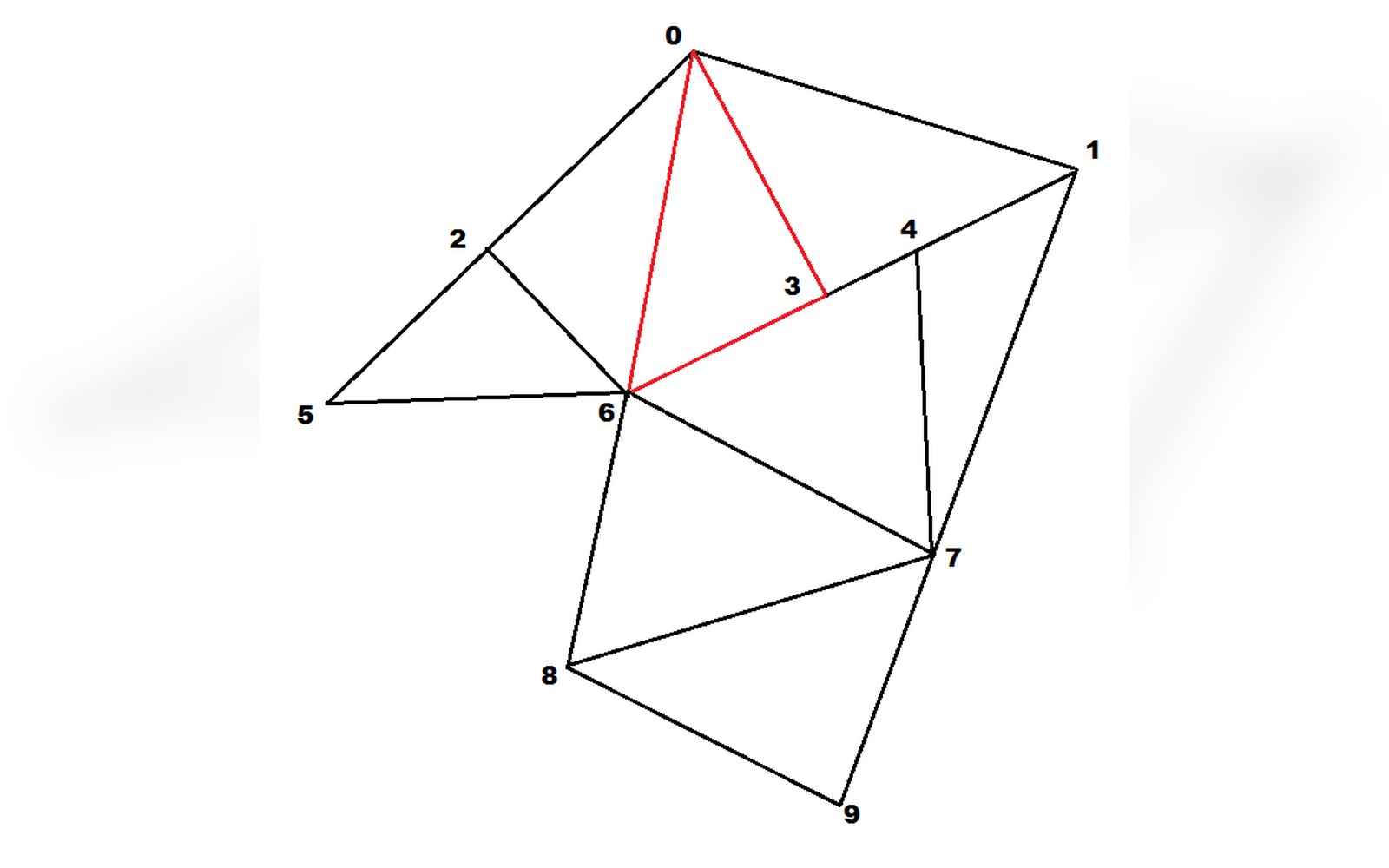
Automatic generation against element behaviour: the choice is usually made by how much analyst time the job can carry.
Photo: Mesh FEM · Wikimedia CommonsThe hybrid compromise
Hybrid meshing — structured hex or prism layers at the wall, unstructured fill elsewhere — is the dominant industrial compromise. The idea is straightforward: apply automation where accuracy demands are modest, and spend human or algorithmic effort where the solution gradient is steepest. Most production CFD workflows for external aerodynamics and internal flows use this strategy. The junction between the structured and unstructured regions introduces non-conformal interfaces or pyramid transition elements, both of which add implementation complexity and, if handled carelessly, local accuracy loss.
Purely structured multi-block hex meshing — partitioning a domain into topological blocks, each mapped to a hex grid — remains the gold standard for accuracy but demands that the geometry be decomposable into hex-friendly sub-volumes. For a clean aerofoil or a simple nozzle, a skilled engineer can do this in hours. For a full engine assembly or a cardiovascular geometry, the decomposition may be geometrically impossible without unacceptable distortion. The field has never produced a general algorithm that reliably hex-meshes arbitrary geometry, and this remains an open research problem ↗ in computational geometry.
Every interior node in a pure hex mesh is shared by exactly eight elements and connects to six edge neighbours, and that regularity is not cosmetic.
The practical choice, then, is not really structured versus unstructured in the abstract. It is a question of what the geometry allows, what the physics demands, and what the available engineering time permits. Hexahedra are not always better — a poorly shaped hex is worse than a good tet — and tetrahedra are not always a concession. The decision belongs inside a specific error budget, against a specific deadline, for a specific flow or structural problem. There is no universal answer, only trade-offs that practitioners make every day.

Element type changes the bandwidth of the assembled system, and with it the cost of every solve that follows.
Photo: Dutch national supercomputer "Huygens" - 8183833489 · Wikimedia Commons